
Why do people still not know about genes?
Even right-wing commentators seem oblivious to the role of genetics in human behaviour

This piece first appeared on the Heterodox STEM Substack
The Blank Slate, the idea that differences in human personality and behaviour are entirely the result of that person’s experiences earlier in life, is utterly dominant in swathes of the social sciences, including sociology, criminology, and anthropology. Left-leaning academics adhere to the blank slate because it implies that humans are fully malleable. If a person’s behaviour, good or bad, is entirely the result of how they have been treated, then one can fix all of society’s problems by re-engineering society to give everyone an idyllic upbringing and so produce a utopia. Indeed, the failure to have done that already can only be attributed to the iniquity of the capitalists who thus need to be overthrown and deposed.
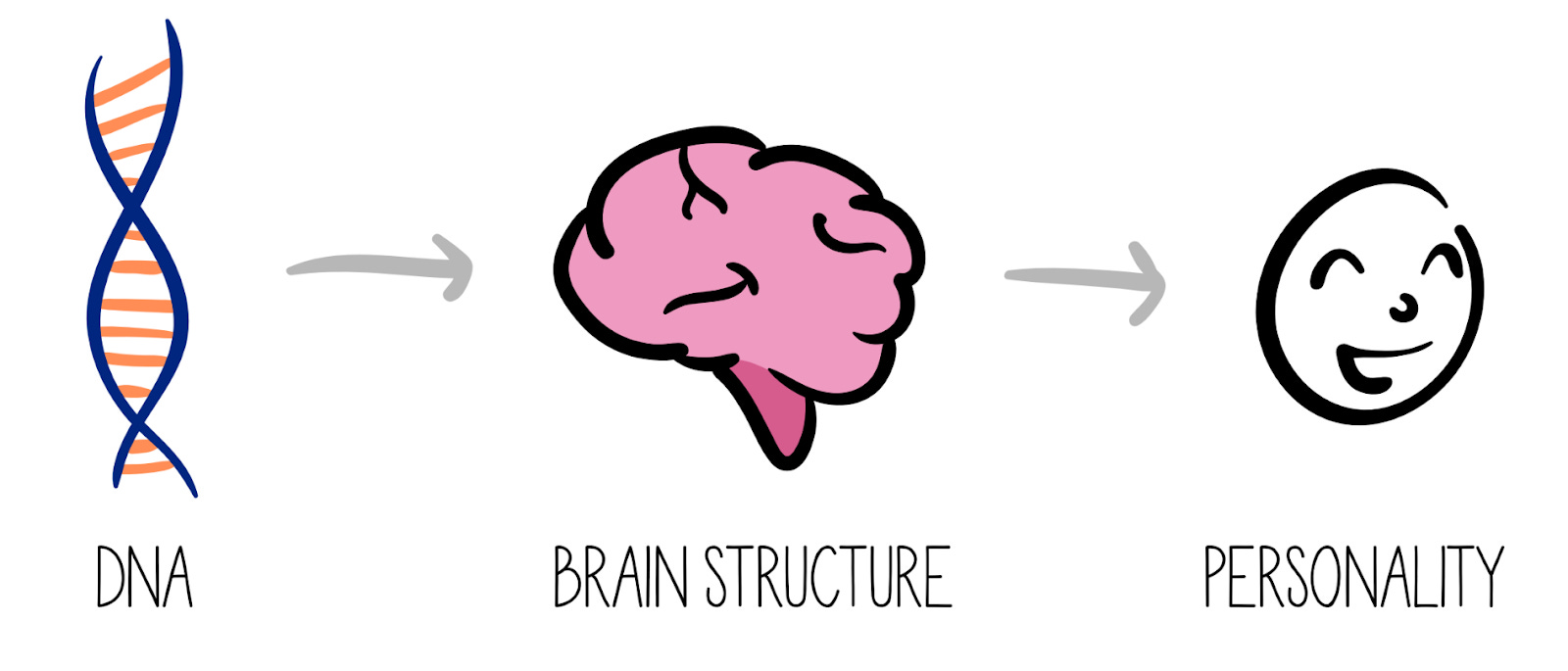
We’ve known for decades that this is utterly wrong. By far the biggest influence on a person’s personality and behavioural traits is their genes [1]. Twin studies, corroborated and supported by adoption studies and other types of study, tell us that about 50% of the variation in behavioural traits is attributable to differences in genes. Everything else – including biological randomness in embryonic development, the influences of families, schools and communities, and all the other influences and experiences specific to each person – only adds up to the other 50% [2].
The heritability of criminality is about 40–50%, which means that whether or not a child is likely to grow up to have a criminal record depends primarily on the genes he was born with, and less than that on his upbringing and childhood environment [3]. So why is this totally ignored in most discussions of the causes of crime?
I was mulling that question while listening to a podcast involving Rob Henderson, Rafael Mangual and Theodore Dalrymple. The 90-minute discussion about “the real drivers of antisocial behavior and crime” is well worth listening to, but not once did they mention genes, and there was only one passing reference to innate biological factors. I would have expected as much in a discussion among left-wing academics (for whom crime is always explained by “poverty”), but this podcast was sponsored by the Manhattan Institute, a right-wing think tank, and none of the three participants could be described as “left wing”.
To answer my own question, it’s because in today’s universities the arts, humanities and social sciences are completely dominated by left-leaning academics, who either don’t know about biology or have an ideological aversion to genetics when it comes to human personality and behaviour. And since nearly all opinion formers, and nearly everyone in the media, all studied the arts, humanities or social sciences at university, they were never taught about the actual science. And so even those critical of left-wing analyses also end up discussing the topic in Blank Slate terms.
In the podcast Rafael Mangual discusses the role of poverty in crime:
“I often hear it said that, well, obviously poverty causes crime because most criminals are poor. And the people who make that argument never seem to contemplate the possibility that the same kind of dispositions that lead someone to think about knocking over a liquor store at gunpoint are also not very conducive to economic success in Western society.”
Mangual is correct. And yes, it’s true that poverty correlates with crime, but that does not mean that poverty causes crime. Instead, crime could cause poverty. Or, more likely, the same attitudes and personality traits that lead someone to crime will also ensure that that person is poor.
So Mangual ruminates further:
“I am consistently confronted with the question of, well, what do you think is at the root of crime? And I’ve spent the last year or so kind of thinking more deeply about that question. And I think that [...] what you see in criminal populations is an overrepresentation of the kind of cluster B personality disorders, things like antisocial personality disorder, substance use disorders, borderline personality disorder, narcissistic personality disorder.”
Yes, personality is the single biggest factor in whether someone will turn to crime. But then he says:
“... it seems like the predictors of the development of those antisocial dispositions are rooted in early childhood trauma. Adverse childhood experiences tend to correlate strongly with the later development of antisocial dispositions.”
Childhood experiences may indeed have something to do with it, but more important is that child’s set of genes. Yes, bad childhood experiences do indeed correlate with later antisocial behaviour, but correlation is not causation. Someone with genes for antisocial behaviour will have inherited their genes from their parents, and so their parents will also have had genes for antisocial behaviour. And that is likely to have resulted in bad parenting and thus in their children having unhappy childhoods. But the primary causal factor is not the parenting, it’s the genes [4]. And yes, all such personality traits are indeed strongly influenced by genes. They’re not there just for show, genes are the recipe that creates us, including what’s inside our skulls.
Much of what is commonly attributed to parenting is actually the effect of parental genes. Yes, the quality of the childhood environment is indeed a good indicator of that child’s later success, but that’s not because the childhood environment is the causal factor, it’s because the child gets the parents’ genes.
Indeed, twin studies tell us that “shared environment” (all environmental factors that siblings living together would share, including parents, the home, the locality, schools) has surprisingly little effect on children’s outcomes, often adding up to only 10% to 20% of the variance. This had been known for decades, and has been verified by multiple studies, but it has totally failed to percolate into mainstream discourse.
None of this is saying that upbringing has no effect. But one cannot deduce that it does simply from a correlation. One first needs to control for genetics. Only once the (larger) effect of genetics has been accounted for can one look for any (smaller) effect from childhood experiences.
Mangual continues:
“... is part of what’s driving outcomes like criminality and drug addiction explainable in whole or in part by what these individuals experienced in childhood that led them on a path where they were still exercising agency in adulthood, but that agency was being exercised against a backdrop of traumatic experiences that led them or at least facilitated them going down a certain path?”
Well yes, that might be a part of it, but more important would be the package of genes that that child got, but Mangual doesn’t even mention this. The three participants continue to discuss factors that might have contributed to a criminal disposition, including childhood trauma, the absence of love and affection, lack of a stable home, single-parent families, household violence, and so on. This is indeed the sort of thing that right-leaning commentators point to, and while such factors might indeed play some role, the analysis again misses the much bigger factor.
If the parents have genes for behavioural traits that amount to societal dysfunction, then both: (1) the childhood environment will be dysfunctional, and (2) the child will inherit genes for societal dysfunction. And it’s the second that then causes poorer outcomes when the child grows up, the childhood environment merely correlates with it. Sorry if I’m getting repetitive, but on multiple occasions I’ve found myself in conversations with educated people who have never heard that stated.
Here is Rob Henderson in a revealing passage:
“You often hear people say, “The issue with single parenthood isn’t the absence of a spouse—it’s the lack of money.” But that reflects a narrow view of what parents actually provide.
There was a study about a decade ago that tried to estimate how much money you’d have to transfer to single-parent households to equalize their children’s educational and occupational outcomes with those of married-parent households. Adjusted for inflation, it would be something like $60,000 a year per family. That’s an interesting figure—but not remotely realistic as policy.
And even reading it makes the deeper point obvious: you can imagine telling a kid, “We’re going to take your dad away, but we’ll give you $60,000 a year.” No child would accept that trade. Which tells you, immediately, that parents provide far more than money.”
Can you see what’s wrong with that study (which you can bet was done by left-wing academics)? It presumes that the wealth of the family, the family socio-economic status, is the causative factor in good educational and occupational outcomes. It presumes that if you gave a single-parent family $60,000 a year, so equalising the family income, then that would equalise the kids’ outcomes. But money doesn’t cause those outcomes, it correlates with them.
By far the biggest factor in an adult’s success and affluence is having genes for the set of traits that employers want (intelligence, conscientiousness, reliability, motivation, etc). And yes, all personality traits have a high heritability, and so our personalities are largely the product of our genes, and then secondarily a result of biological randomness in embryonic development [5], while childhood experiences seem to be only a tertiary effect.
So successful children do indeed tend to come from stable, well-off families. But that’s not the effect of money (and nor is it the effect of things that money can buy, such as maths tutors, violin lessons, museum trips, and skiing holidays), it’s primarily because a child of successful parents will get a package of genes for being successful. (Obviously I’m talking about average tendencies here, and children get half of the genes of each parent, which complicates things, but I’m using a shorthand for readability.)
So Henderson is right that parents give more than money, they also give genes. We’ve known about this for 50 years now, and all of this is well known to those who have looked into the science. It’s also nearly 30 years since Judith Rich Harris explained it in her popular book, The Nurture Assumption. And yet, it has so failed to percolate into the mainstream discourse that even right-wing commentators such as Henderson, Mangual and Dalrymple seem oblivious to it.
Here, for example, is Henderson:
“Researchers consistently find little to no relationship between childhood poverty—how much money your family had growing up—and later outcomes like substance abuse, reckless behavior, drunk driving, or criminality. By contrast, they find a consistent link between childhood instability and those outcomes. Instability is measured by things like how often you moved as a child and how many romantic partners your primary caregiver had. So if you were raised by a single mom and she cycled through different boyfriends over the course of your childhood, that seems to matter, as does the day-to-day disorder and uncertainty in the household. Even when researchers control for family income, the relationship between instability and negative outcomes persists. And I think this helps clarify a big question in these debates: what actually shapes how people turn out?”
The naive answer, the “mainstream” answer, is that the instability shapes the child. But those aware of the science instantly think about genetic confounding. The same package of personality traits that shaped that mother’s lifestyle would then be passed (through genes) on to the child. And genes, twin studies tell us, have a bigger effect on that child’s outcomes than the childhood environment.
Whatever your politics, whether you’re left, right or centrist, you’re not going to design effective policy interventions if they are built on basic misunderstandings of how humans work. I’m not trying to score political points here, I’m trying to play the disinterested scientist who thinks that both left-wing discourse and right-wing discourse on crime is misconceived.
Crime is not caused by poverty and nor is it caused by absent fathers. At least, you can’t claim either of those without first proving causation, not just correlation, and you can’t do that without controlling for the confounding effects of genetics. And you’re going to find that hard to do given that genetic effects are bigger than the effect of the childhood environment. But unless you’ve properly done that, much of what you think you know about the causes of bad outcomes is likely to be wrong.
Notes:
[1] Polderman et al 2015 (“Meta-analysis of the heritability of human traits based on fifty years of twin studies”; Nature Genetics, 47(7):702–9) report: “… across all traits the reported heritability is 49%”. Heritability is a measure of how much of the variance of a trait is down to differences in genes compared to differences in everything else. The heritability depends on the trait being considered, on the population being studied, and on the range of environments in the study.
[2] Plomin et al 2016 (“Top 10 Replicated Findings from Behavioral Genetics”; Perspect Psychol Sci. 11(1):3–23) report: “[a] consistent finding is that heritabilities are substantial, often accounting for half of the variance of psychological traits” and “For personality, heritabilities are usually 30%–50%”. In contrast the effect of “shared environment” (defined as all environmental factors shared by siblings living together) is weaker. “For instance, for antisocial behavior in adolescence, shared environment accounts for about 15% of the total phenotypic variance.”
[3] Koyama et al 2024 (“Genetics of child aggression, a systematic review”; Transl Psychiatry 14:252) report: “aggressive behaviors are highly heritable and genetic factors account for roughly 50–65% of the risk of high aggression”
Gard et al 2019 (“Genetic influences on antisocial behavior”, Curr Opin Psychol, 27:46–55) report: “… Using twin designs, meta-analyses indicate that heritable effects explain nearly 50% of the variance in [anti-social behavior], while shared and nonshared environmental effects account for roughly 14% and 37%, respectively”.
Obviously the heritabilities are different for different types of anti-social behaviour. “For example, aggression (e.g. physical fights) is more heritable (65%) and under less environmental influence (5%) than rule-breaking (e.g. property theft) (additive genetic: 48%; shared environment: 18%).”
Kendler et al 2015 (“A Swedish national twin study of criminal behavior and its violent, white-collar and property subtypes”, Psychol Med. 45(11):2253–62) report: “For all criminal convictions, heritability was estimated at around 45% in both sexes, with the shared environment accounting for 18% of the variance in liability in females and 27% in males”.
[4] For example the Plomin et al (2016) review cited in [2] says: “… the first study of this type found that two-thirds of the correlation between maternal negativity and adolescent children’s antisocial behavior could be attributed to genetic factors […] More than a hundred studies have reported similar results”.
[5] The genes, of course, provide only a recipe for a brain, and the playing out of that recipe at the molecular level, as the child’s brain develops, involves a lot of randomness. See, for example “Innate” by Kevin Mitchell (2018, Princeton University Press). This factor has often been overlooked. In classic twin studies it would be accounted as “non-shared environment”, though it is not an effect external to the child.
Very interesting article but if genetics plays such a large role in antisocial personality traits what is to be done about that? Discourage people who have those traits from reproducing? Prevent them from doing so? Dangerous territory indeed. More interesting would be the question of waht types of interventions can be successful in dissuading those with antisocial personalities from acting on their worst impulses? One might suppose that in highly cohesive social enviornments that discourage antisocial behaviors that at least some mitigation is possible?
Your point is correct. Even conservatives don't realize how important genes are. Also, when someone like Henderson points to, say, lack of a father at home, he ignores the non-genetic cultural defects of the mother. I'd like to think having a father at home is important, me being a father, but plenty of widows have raised kids who turned out well.
The second-most important ignorance, however, after ignoring genes, is "non-shared environment". In IQ, for example, environment used to be "everything but genes". People thought of it as parental income, books at home, quality of teachers, etc. All those turn out to be trivial in effect, if I remember right. Most of "environment" is things we can't measure-- perhaps randomness in how your genes translate into fetal brain development, interaction between genes from your mother and your father, which direction your cells decided to grow in day 40 in the womb. Important, but not stuff we can influence with public or private policy.